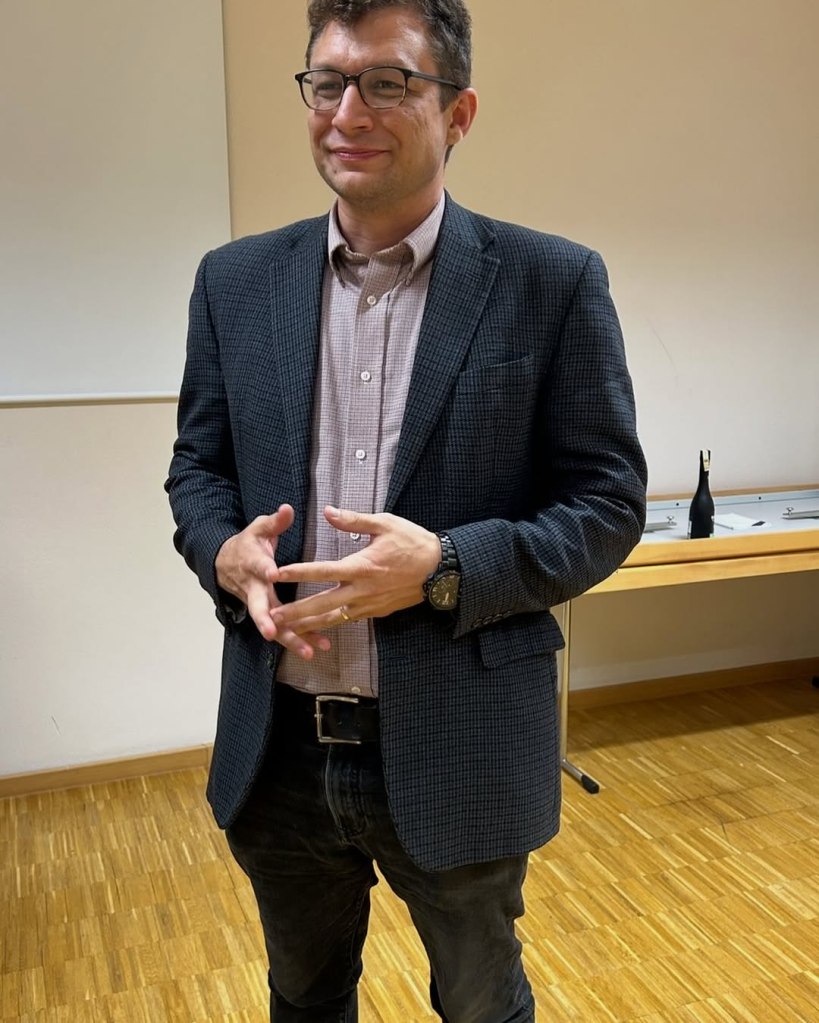
“The tombs also were opened. And many bodies of the saints who had fallen asleep were raised” (Mt 27:52). Towards the end of his career, Renaissance master Michelangelo hired apprentices to chisel the rough shapes of the sculptures “entombed” inside the marble strains of mountains. Once the apprentices had completed that backbreaking work, Michelangelo would transform the crude forms into the beautiful statues and sculptures for which he would become world-renowned. Lula and I are currently attending the LCMS’ annual Eurasia church planting conference in Wittenberg, Germany, where we are discussing how to further grow God’s Kingdom, as we spread the Gospel, plant Lutheran churches, and show mercy. But planting Lutheran churches obviously necessitates having Lutheran curricula, beginning with the Book of Concord, a collection of core documents from the 16th century that define Lutheran Christianity. Our goal is to translate these works into the 21 (!) different languages prevalent in Eurasia, so that aspiring church leaders can learn about historic Christianity in their native tongue. This is a massive undertaking, headed up by our missionary colleague Rev. Tyler McMiller [photo] of the Evangelical Lutheran Church of Italy. He shared his vision at the conference. Translating key Lutheran works into so many languages is an enormous challenge, not unlike Michelangelo raising up the beautiful sculptures once entombed in those blocks of marble. Rev. Tyler explained how our translation team (on which I also serve, responsible for Farsi) is exploring the possible use of artificial intelligence tools to provide the rough translations, which will then be “Lutheranized” and polished by native speakers. So that we can plant Lutheran churches all across Eurasia, may the Lord provide the apprentices—in whatever form—and linguistic masters necessary to raise up the 21 translations of the core works still entombed in their source languages!
 The Tiews in Germany